








 It was a day for two sides of the investment equation in Indonesia – government and US business – to come together to discuss the future early in the second term of the Joko Widodo administration. The 7th annual US-Indonesia Investment Summit drew more than 300 people and over 30 companies – a Summit record – to reinforce the idea that the appetite remains strong to engage with Indonesia.
Coordinating Minister for Economic Affairs Airlangga Hartarto, Minister of Finance Sri Mulyani Indrawati, Minister of Trade Agus Suparmanto, Presidential Chief of Staff Moeldoko, West Java Governor Ridwan Kamil, US Ambassador to Indonesia Joseph R Donovan, and other US government representatives met with House of Representatives (DPR) members, stakeholders and a wide range of US multinational companies covering a diverse number of sectors under the theme “Making an Impact” and all sharing a very positive message about the benefits of investing in Indonesia.
 The event also marked the 70th Anniversary of US-Indonesia diplomatic relations.
Officially representing President Joko Widodo, Coordinating Minister for Economic Affairs Airlangga Hartarto delivered the opening keynote address. Looking ahead to the coming year, he said: “Indonesia will face challenges not only from external factors, but domestic factors, as well.” He noted that Indonesia is committed to deregulation, including a new Omnibus Law that includes both tax reform measures and steps to improve the ease of doing business.
 Minister of Finance Sri Mulyani Indrawati spoke of how focused Widodo is on securing “high quality” foreign investment in Indonesia, especially in the manufacturing and infrastructure sectors, by simplifying the bureaucratic framework, and offering a wealth of incentives to make the investment climate for foreign companies even more attractive.
“We want you to know that we mean business,” she told delegates.
But it was Moeldoko in the closing keynote address who threw down the gauntlet to representatives of more than 30 US companies at the summit.
 “I am not only inviting you [to invest in Indonesia], I am challenging you right now,” he said. “Hurry up and come or you will be left behind. Very far behind.”
He also spoke of Widodo’s eagerness to cut through the bureaucratic and regulatory process by simplifying and in many cases deleting regulations and bureaucratic processes as the president pursued “a new way” for investors to do business here.
“Everything will be simple,” he said.
 Moeldoko also spoke of how Indonesia is a safe place to do business, with political and economic stability and security very well maintained.
“As a former chief of the armed forces,” he said. “If I say it is safe, you can all sleep soundly.”
Earlier in the day West Java Governor Ridwan Kamil was equally direct in his bid to lure US investors to his province, offering $60 billion worth of infrastructure projects, and reiterating the theme of simplifying the process.
"In all the projects, you will have two doors, the central government and the provincial government,” he said. “Mine will get you there faster since I understand the issues.”
“It was a great turnout and a very positive day of meetings,” said AmCham Managing Director A. Lin Neumann. “We had tremendous support from our companies and there was a real sense of wanting to move forward partnering with the government.”
Investment report released
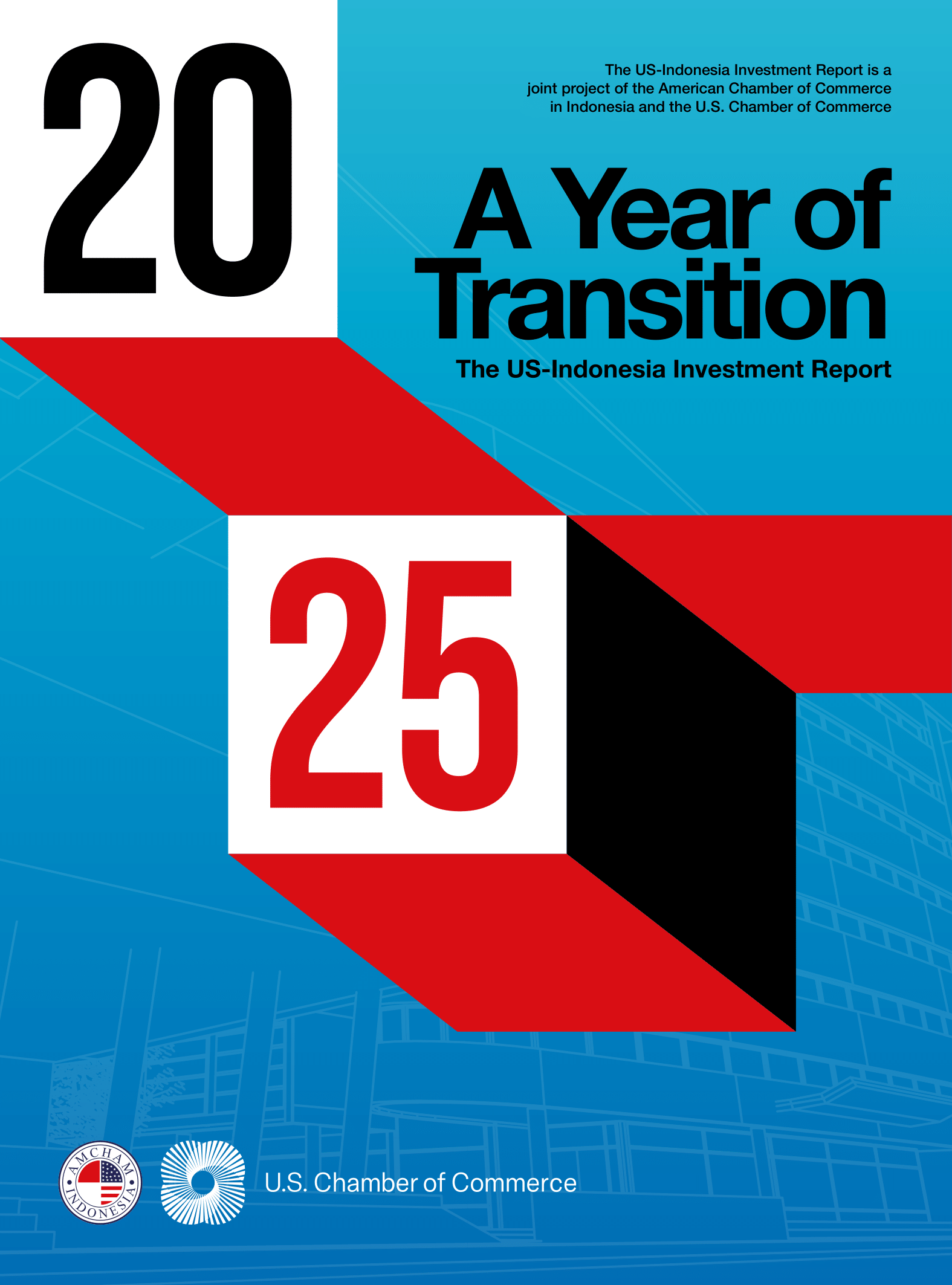
The Summit was held November 21 at the Mandarin Oriental Hotel in Jakarta, organized by AmCham and the U.S. Chamber of Commerce as part of their Initiative Indonesia advocacy and engagement project. As part of the event, AmCham launched the latest US-Indonesia Investment Report, “Making an Impact,” funded by USAID and researched and written by Ernst and Young Indonesia.
The report quantifies the actual level of US investment from 2013 to 2017 and looks at the factors impacting investment performance. It concludes that the US remains Indonesia’s largest source of foreign direct investment, at $36 billion over the period studied. The analysis also contains sector-specific recommendations and identifies some of the barriers to investment, with recommendations for further discussion. You can read the full report here.
 In his remarks opening the Summit, AmCham Board President Scott Hanna praised the $36 billion figure as significant but noted that AmCham’s very first Investment Report, in 2013, had predicted based on interviews with companies that $61 billion of US FDI would flow into the country from 2013 to 2017. The gap represents lost opportunity, Hanna said, noting that he hopes “US investment will help Indonesia realize its full potential.”
Charles Freeman, senior vice president of Asia, U.S. Chamber of Commerce, also spoke at the Summit. “At a time when global trade uncertainty may offer unique opportunities for Indonesia, we look forward to working with our counterparts to enhance our bilateral trade relationship,” he said.
 The U.S. Chamber also launched a multi-year corporate social responsibility effort to help protect and develop Indonesia’s nine UNESCO World Heritage Sites. The Indonesia Heritage Preservation Initiative, which will match American and Indonesian companies with tailored projects that align with their strategic priorities or expertise, while highlighting the private sector’s key role in US-Indonesia relations and its commitment to preserving humanity’s greatest treasures.
Panel discussions
As well as the featured speakers, a key part of the day were the six panel discussions promoting dialogue between government officials, companies and non-government stakeholders. The topics under discussion were Indonesia’s Cybersecurity – A Policy Certainty; Jokowi 2.0 - What is Ahead; A Sustainable Energy Future; Finding a New Path to Health Policy; An Inclusive Financial Future and Digital Economy as the Next Driver of Economic Growth.
Government representatives from the Cyber and National Encryption Agency; House of Representatives Commission I; the Ministry of Communications and Informatics; the Indonesian Investment Coordinating Board; the trade, industry, energy and mineral resources, health, law and human rights ministries; the National Agency of Food and Drug Control; SKK Migas and BPJS Kesehatan were all eloquent on their respective fields.
The new Minister of Trade, Agus Suparmanto, also spoke at the Summit, his first appearance at an event with US investors.
 Engaging with the government were representatives from Microsoft, Facebook, Exxon Mobil Indonesia, Freeport, Merck Sharp and Dohme, PhRMA, Mastercard; RGA Reinsurance, UL, AIG Indonesia and many others. The Indonesian Chamber of Commerce and Industry (Kadin) and the Indonesian Employers Association (Apindo) also spoke.
Heading in the right direction
Former Minister of Trade and Former BKPM Chairman Thomas Lembong brought a mixture of candor and levity in his address, speaking of how he felt President Joko Widodo was heading in the right direction with his second administration cabinet, following the best path to get things done.
"My take is that the technocrats already had their time,” he said. “It's now the politicians' turn to pass through reforms.
"The most brilliant ideas from technocrats like us are useless if not legislated."
Other featured speakers included US Deputy Assistant Secretary of State for Transportation Hugo Yon and Counselor to the CEO, Overseas Private Investment Corporation Caleb McCarry.
Throughout the day a vitally important but less visible part of the summit was when the ministers and other government representatives held off the record discussions with US companies on the sidelines of the Summit.
More stories
New Jokowi Cabinet Is 'Wonderful': Sri Mulyani